
CONTENT
How to become a Job-Ready Java Developer without Work Experience
Why Entry-Level Java Developer Jobs Are Disappearing
A recent analysis of over 15,000 live Indian tech job postings found that only 5.9% were tagged entry-level or junior — while 50.1% asked for senior engineers. That's roughly eight senior openings for every one entry-level Java developer jobs opening. Barely 0.4% of these roles were remote too, meaning freshers are competing city by city, not nationally. This is the real reason a Java developer without experience feels permanently stuck.
It isn't that companies stopped hiring Java developers TIOBE still ranks Java among the top 4 programming languages worldwide, and Indian IT majors like TCS, Infosys, and Wipro are onboarding over 70,000 freshers combined this year. The problem is that "entry-level" now silently expects months of practical exposure most fresh graduates simply don't have on paper yet.
Is 25 Too Late to Start Coding? What the Data Actually Shows
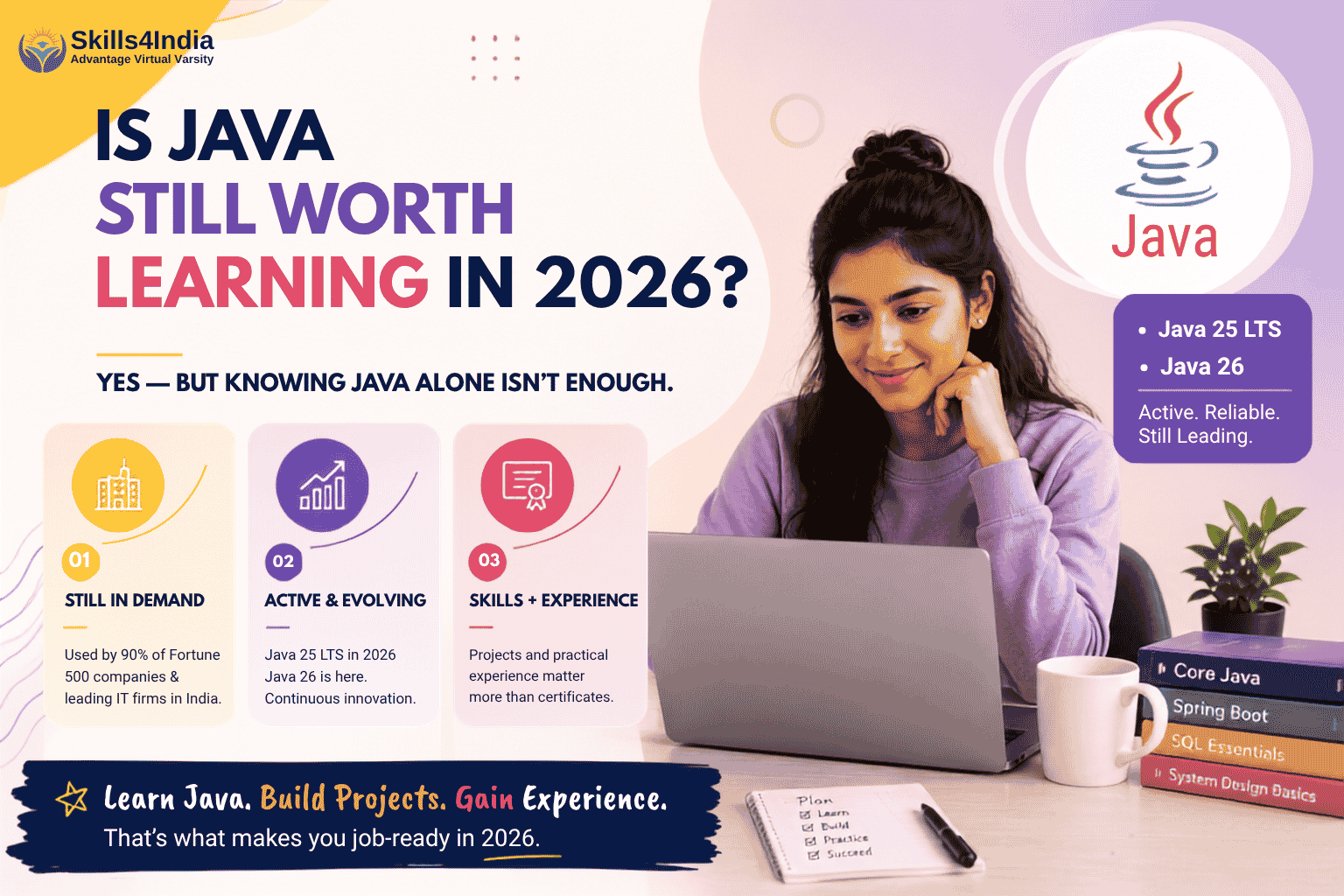
No and real career-changer stories back this up. Developers who picked up programming at 30, 32, even 35 have gone on to join product companies and MNCs within two to four years, simply by building consistent proof of their Java developer skills instead of worrying about a head start they missed. Age isn't the filter recruiters apply. Absence of demonstrable Java developer skills is.
Will AI Replace Java Developers?
Short answer: no but it has raised the bar. The 2026 Stack Overflow Developer Survey found 66% of developers are frustrated with AI code that's "almost right but not quite," meaning debugging, architecture judgment, and business-logic thinking matter more, not less. AI hasn't eliminated Java roles; it has quietly absorbed the boilerplate work juniors used to be hired for. That's part of why entry-level Java developer jobs feel scarcer today the bar for "junior" simply moved up.
The Java Developer Skills Recruiters Actually Screen For
Here's a simple Java developer roadmap to follow, step by step:
1. Programming fundamentals
2. Core Java
3. Advanced Java (multithreading, Java 8+)
4. SQL and databases
5. Git and GitHub
6. Spring Boot and REST APIs
7. Build real projects
8. Get internship experience
9. Build your resume and portfolio
10. Apply for Java developer jobs
Most beginners stop at step 6 and jump straight to step 10. That's the mistake. Steps 7 and 8 are what actually separate candidates who get interviews from candidates who get silence. Follow this Java developer roadmap in order, and don't skip ahead — that single decision determines whether you get hired or stay stuck applying for months.
Best Java Projects for Beginners
Good java projects for beginners should feel like real work, not a college assignment. Java projects for beginners are also the fastest way to show a recruiter you can actually code, not just recite syntax. Try these:
Student or Library Management System
Banking System with transactions
E-commerce backend (products, cart, orders)
Employee Management System
A REST API project connected to a real database
A small full-stack Java project
Why Freshers Actually Get Rejected
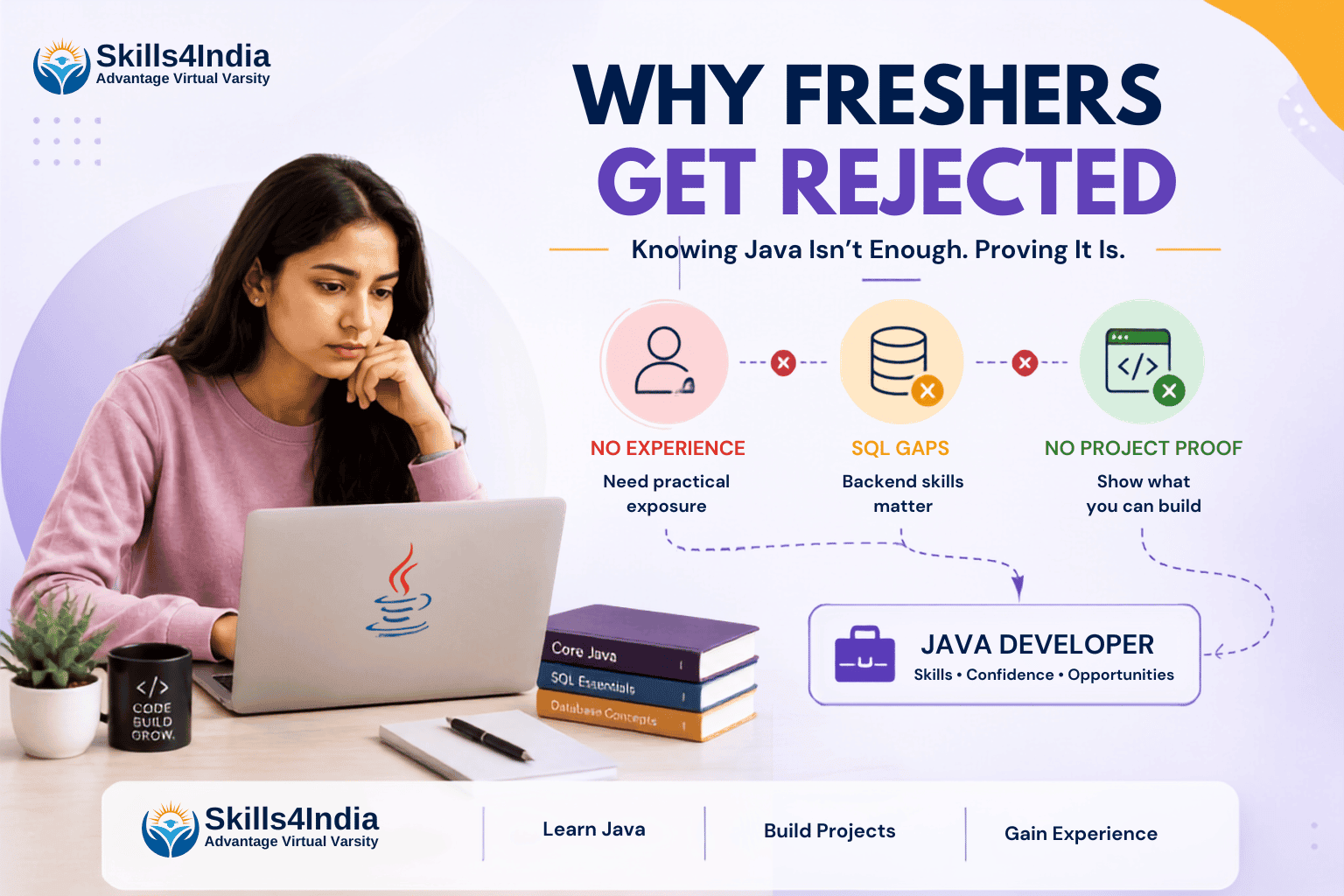
By in depth research, survey and online sources we found three problems keep showing up everytime.
The experience catch-One recent tier-1 college graduate, who had already lost a job offer, described applying to fresher roles for nearly a month straight. He got one interview, went through four full rounds, and was still rejected the reason given was lack of experience. This is one of the most repeated stories in fresher job-search threads.
SQL gaps- Career-guidance sources tracking 2026 hiring patterns note that interviewers commonly reject Java candidates over database questions, even when their Core Java answers were solid. It's a quiet rejection reason nobody puts in a job description.
No proof of real work-many fresher was told plainly: it's not impossible to get a Java job as a fresher, but companies don't prefer freshers by default. A completed course doesn't change that. A working project does.
How to Get Java Internship Experience
A good Java internship for freshers should feel like a real job, just smaller. You should get real tasks. Mentor support when you're stuck. A finished project at the end. And proof you can show a recruiter, not just an attendance certificate.
Skills4India already runs this exact Java internship model across its tracks, and a dedicated Java internship for Java specifically is coming soon to the platform. The process is simple,
in 6 steps: Apply → Live Training → Project Allotment → Expert Guidance → Project Submission → Certificate. Durations range from 15 days to 6 months, fully remote, so it fits around college hours.
You get a digitally verified certificate at the end, one that Skills4India states is accepted by colleges and shareable on LinkedIn, which matters when a recruiter is scanning your profile in seconds.
How Long Does It Take to Become a Java Developer?
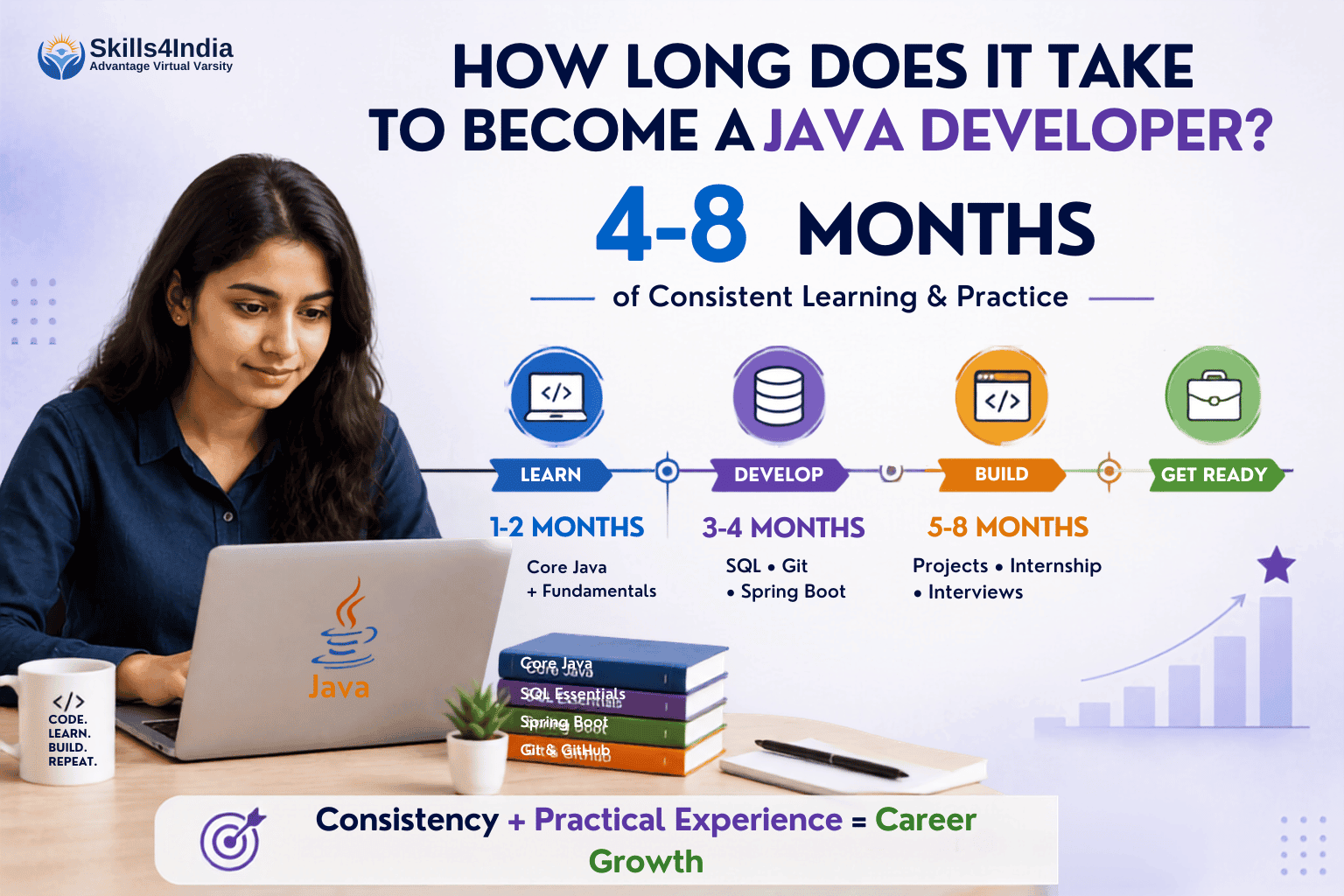
Around 4 to 8 months, if you're consistent, is a realistic timeline to become a Java developer in 2026. Roughly 6 to 8 weeks for fundamentals and Core Java. Another 4 to 6 weeks for SQL, Git, and Spring Boot. The rest goes into projects, internship experience, and interview prep.
Java Developer Salary for Freshers in India
Entry-level Java developer salary in India usually starts around ₹4.5–7 LPA at service-based and enterprise companies. Candidates who can show real project or internship experience tend to see faster Java developer salary growth within their first 18 to 24 months, compared to those relying on classroom learning alone. It's worth setting realistic Java developer salary expectations early, so you're not discouraged by a slower start.
Final Words
Follow the Java developer roadmap: learn the fundamentals, build portfolio-worthy projects, get mentor-guided internship experience, and prepare for the skills employers actually test.
Skills4India is built to help you make that journey from learning Java to becoming job-ready step by step, through practical projects, expert guidance, and real internship experience.
Ready to build your Java career? Start learning, start building, and start preparing for the opportunities ahead with Skills4India.